
Pharmacy Education Programs at HRIT University
Understand pharmacy education at HRIT University through B.Pharm and D.Pharm programs, with details on academic requirements, course duration, practical skills, clinical knowledge and career opportunities across healthcare and pharmaceutical industries.
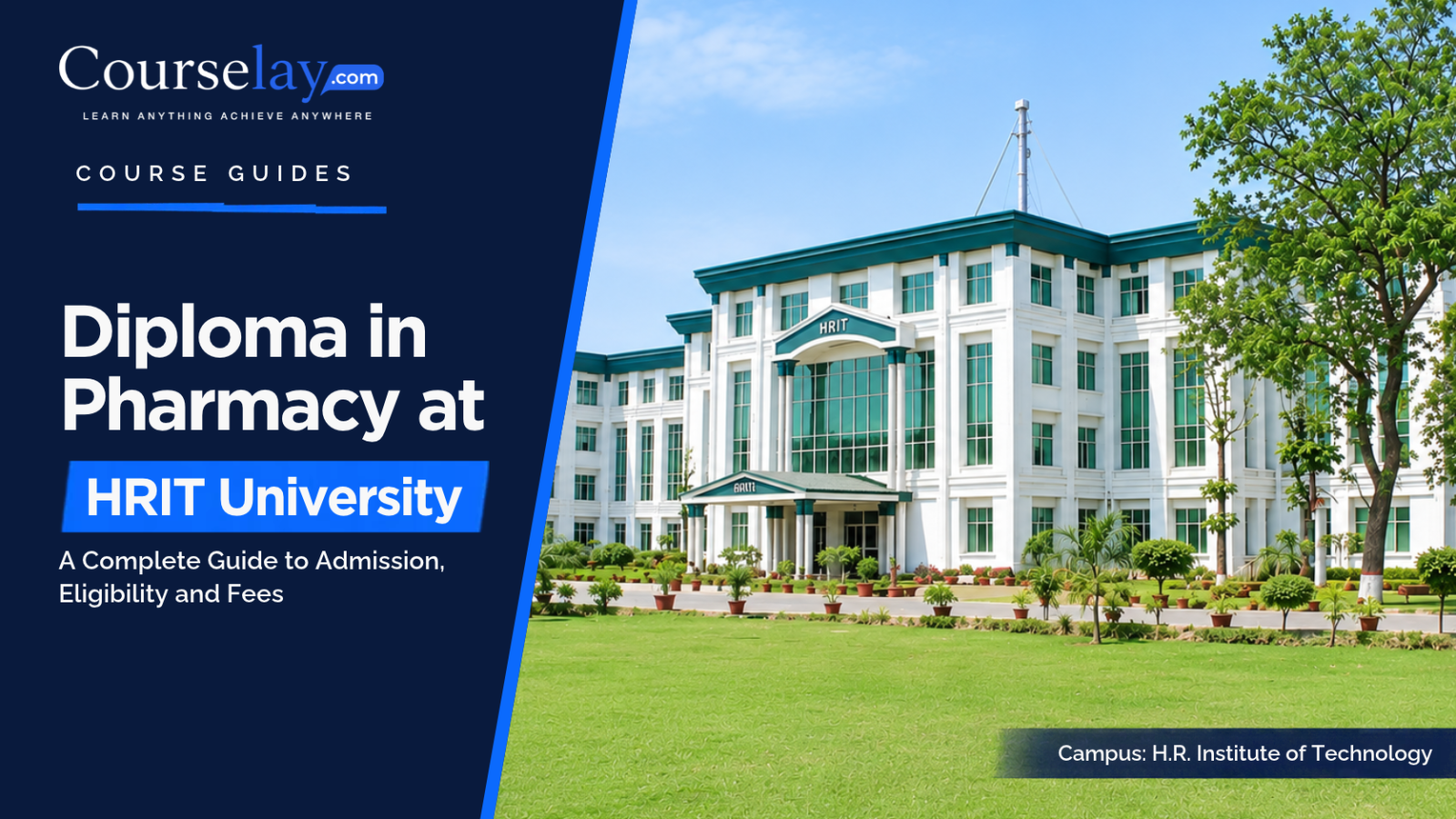
B.Pharm & D.Pharm After 12th: Eligibility, Admission and Fee Details 2026
Pharmacy plays a vital role in healthcare, covering medicine development, drug testing, pharmaceutical manufacturing and patient care. After Class 12 with science subjects, students can pursue B.Pharm or D.Pharm to build a career in this field. While B.Pharm is a four-year undergraduate degree, D.Pharm is a two-year diploma, with different academic structures and career pathways.
For the 2026 Admission session, HRIT University & Uttaranchal University offer both programmes, while UPES offers B.Pharm. Understanding their eligibility criteria, admission process, course fees and academic facilities can help students make an informed decision. Both qualifications also provide pathways into pharmaceutical companies, hospitals, retail pharmacies and other healthcare organisations. Comparing course duration, learning opportunities and future career prospects can help applicants identify a programme aligned with their professional goals.

This article provides detailed insights into B.Pharm and D.Pharm courses, covering eligibility criteria, fee structure, admission procedures, leading university options and career prospects across the pharmaceutical and healthcare industries.
1. Industry-Focused Pharmacy Education: B.Pharm and D.Pharm Explained
Pharmacy education focuses on the scientific principles behind medicines, including their composition, preparation, testing, therapeutic applications and distribution. It combines pharmaceutical chemistry, biology, pharmacology and healthcare-related subjects.
Understanding the Bachelor of Pharmacy (B.Pharm) Programme?
Bachelor of Pharmacy (B.Pharm) is a four-year undergraduate programme focused on pharmaceutical sciences, medicine formulation, drug development and healthcare practices. The course provides students with knowledge of how medicines are manufactured, tested, stored and distributed. It combines theoretical learning with laboratory training to develop practical pharmaceutical skills. Graduates can pursue opportunities in pharmaceutical companies, hospitals, quality control laboratories, research and drug manufacturing.
Major Disciplines Covered in the B.Pharm Programme -

Laboratory activities help applicants understand drug formulation, medicine testing, pharmaceutical calculations and quality standards. Bachelor of Pharmacy (B.Pharma.) at HRIT is a four-year programme listed under HRIT University's Faculty of Pharmacy. Applicants considering B.Pharm at H.R. Institute of Technology can review the programme structure, eligibility and admission requirements before applying.
Applicants shortlisting Best B.Pharm Colleges in Ghaziabad – HRIT should compare PCI approval, laboratories and total fees. The programme also develops practical knowledge of pharmaceutical production, drug safety, dosage preparation and regulatory standards. This academic foundation helps students understand the role of pharmacists across hospitals, community pharmacies, research facilities and pharmaceutical industries.
Understanding the Diploma in Pharmacy (D.Pharm) Programme?
Diploma in Pharmacy is a professional diploma qualification that introduces applicants to pharmaceutical sciences, medicine dispensing, pharmacy operations and patient care. The programme generally has a two-year academic duration. It covers pharmaceutics, pharmaceutical chemistry, pharmacology, social pharmacy, pharmaceutical law and practical pharmacy training.
Diploma in Pharmacy at H.R. Institute of Technology is listed as a two-year programme by HRIT University. Applicants interested in this qualification should review the current admission requirements and practical training provisions. The programme generally has a two-year academic duration. It covers pharmaceutics, pharmaceutical chemistry, pharmacology, social pharmacy, pharmaceutical law and practical pharmacy training.
B.Pharm vs D.Pharm: A Comparison of Pharmacy Programmes?
| Particulars | B.Pharm | D.Pharm |
|---|---|---|
| Full Form | Bachelor of Pharmacy | Diploma in Pharmacy |
| Qualification | Undergraduate Degree | Diploma |
| Duration | 4 years | 2 years |
| Eligibility | 10+2 with Physics, Chemistry and Biology/Mathematics | 10+2 with required science subjects |
| Academic Structure | 8 semesters | 2 academic years |
| Main Focus | Pharmaceutical sciences and drug development | Foundational pharmacy education |
| Practical Learning | Laboratory work, formulation and analysis | Dispensing and practical training |
| Higher Studies | M.Pharm and other eligible programmes | B.Pharm lateral entry and other eligible programmes |
| Career Areas | Research, manufacturing and quality assurance | Pharmacy operations and other eligible roles |
B.Pharm and D.Pharm are different qualifications and should not be considered interchangeable. Applicants should select a programme according to their educational objectives.
2. HRIT B.Pharm: Admission Criteria and Application Process
HRIT University, Ghaziabad, offers pharmacy programmes through its Faculty of Pharmacy. Its Bachelor of Pharmacy programme covers pharmaceutical sciences, drug formulation, manufacturing, pharmaceutical analysis and healthcare-related applications. Applicants evaluating Bachelor of Pharmacy (B.Pharma.) at HRIT can review the following course information.
Bachelor of Pharmacy: Programme Details
| Particular | Information |
|---|---|
| Programme | Bachelor of Pharmacy |
| University | HRIT University |
| Location | Ghaziabad, Uttar Pradesh |
| Qualification | Undergraduate degree |
| Duration | 4 years |
| Admission process | HRIT HNAT Test, as published |
| Compulsory subjects | Physics and Chemistry |
| Additional subject | Mathematics or Biology |
| Minimum marks | 45%; 40% for reserved categories, according to published criteria |

How to Apply for B.Pharm at HRIT
The admission process generally involves the following steps:
- Visit the official HRIT University website.
- Open the Bachelor of Pharmacy programme page.
- Review the eligibility and selection criteria.
- Complete the university application form.
- Upload academic and personal documents.
- Follow the prescribed entrance-test procedure.
The university lists the HRIT HNAT Test as part of its admission process. Applicants should confirm the current selection requirements and application deadlines directly with the admission office. They should also check the required documents and registration steps before submitting their application.

B.Pharm Subjects and Practical Learning

B.Pharm at H.R. Institute of Technology can be considered by applicants interested in developing academic knowledge across pharmaceutical manufacturing, research and pharmacy practice. The programme combines classroom learning with laboratory-based sessions to build subject knowledge and practical understanding. It also introduces students to drug formulation, quality testing and pharmaceutical standards.
Students shortlisting B.Pharm Colleges in Ghaziabad – H.R. Institute of Technology (HRIT) should check laboratory facilities and practical training arrangements. They should also review the course curriculum, faculty support and available academic resources before making an admission decision.
Career Opportunities After B.Pharm
Graduates can consider opportunities across pharmaceutical companies, research organisations, manufacturing units and healthcare services.
| Job profile | General responsibilities |
|---|---|
| Production Executive | Supports pharmaceutical manufacturing |
| Quality Control Analyst | Tests medicines and raw materials |
| Quality Assurance Associate | Maintains quality standards |
| Research Assistant | Supports pharmaceutical research |
| Regulatory Affairs Associate | Handles regulatory documentation |
| Clinical Research Associate | Supports clinical research activities |
| Pharmacovigilance Associate | Assists with medicine safety monitoring |
| Registered Pharmacist | Provides pharmacy services subject to registration |

3. D.Pharm at H.R. Institute of Technology: Eligibility, Fees & Admission 2026

The programme introduces pharmaceutical sciences, dispensing techniques, medicine handling, pharmacy law, patient care and professional ethics. It also develops an understanding of prescription processing, dosage calculations and safe medicine distribution. Students gain practical exposure to pharmacy procedures through laboratory sessions and training activities. The curriculum helps them understand the responsibilities of pharmacists in hospitals, community pharmacies and healthcare settings. It also builds essential communication and professional skills required for pharmacy practice.
D.Pharm Course Details at HRIT
| Particular | Information |
|---|---|
| Programme | Diploma in Pharmacy |
| Institution | HRIT University |
| Location | Ghaziabad |
| Qualification | Diploma |
| Duration | 2 years |
| Admission process | HRIT HNAT Test, as published |
| Academic areas | Pharmaceutics, pharmaceutical chemistry and pharmacology |

D.Pharm: Eligibility Criteria and Admission Requirements
The general eligibility requirement for D.Pharm is Class 12 with Physics and Chemistry and either Biology or Mathematics. The applicable PCI regulations and university admission notification should be checked for the exact qualifying marks, age and other conditions. Applicants should also verify whether any additional documents or subject-specific requirements apply during the admission process.

D.Pharm Admission Process
The general application procedure includes:
- Reviewing the course eligibility.
- Registering through the university admission portal.
- Completing the application form.
- Submitting Class 12 academic records.
- Following the prescribed selection process.
- Completing document verification.
Diploma in Pharmacy at H.R. Institute of Technology is listed on the university website with the HRIT HNAT Test as its admission process. Applicants should review the latest admission notification for details about eligibility, selection criteria and application deadlines. They should also confirm the required documents and registration procedure with the admission office before applying.
D.Pharm Subjects and Practical Training
The curriculum introduces the basic principles of pharmaceutical sciences and pharmacy practice. It covers essential subjects such as pharmaceutics, pharmaceutical chemistry, pharmacology and social pharmacy. Practical sessions help students understand medicine preparation, dispensing procedures and safe handling of pharmaceutical products.
Major academic areas include:

Practical training helps develop skills related to dispensing, medicine storage, prescription handling and pharmacy documentation. It also familiarises students with maintaining inventory records, checking medicine expiry dates and following safety procedures. These activities strengthen their understanding of day-to-day responsibilities in hospital and community pharmacy settings.

Career Opportunities After D.Pharm
After completing the diploma and meeting the applicable professional and regulatory requirements, graduates can explore the following career opportunities. The programme provides a foundation for working across retail pharmacies, hospitals and pharmaceutical organisations. Career options may vary depending on registration status, relevant qualifications and employer requirements.
| Career area | Responsibilities |
|---|---|
| Community Pharmacy | Supports pharmacy operations |
| Hospital Pharmacy | Assists with medicine inventory |
| Pharmaceutical Distribution | Supports medicine supply |
| Medical Store Operations | Maintains stock and records |
| Pharmaceutical Sales | Communicates medicine-related product information |
| Pharmacy Services | Performs eligible pharmacy-related duties |

4. B.Pharm and D.Pharm at UPES and Uttaranchal University
Applicants considering pharmacy education can also evaluate universities outside Ghaziabad. UPES and Uttaranchal University in Dehradun offer additional academic options. Comparing course duration, eligibility criteria, fees and facilities can help applicants assess these institutions more effectively.
B.Pharm at UPES, Dehradun
UPES offers a four-year Bachelor of Pharmacy programme through its School of Health Sciences and Technology. The course is structured into eight semesters and includes pharmaceutical chemistry, pharmaceutics, pharmacology, pharmacognosy and pharmaceutical analysis.
The published eligibility requirements include:

UPES offers admission through UPESPAT, JEE Main, NEET, CUET and Class 12 merit.
The programme also includes laboratory-based learning, clinical and community exposure, internships and research-related academic activities. These experiences help students develop practical knowledge and industry-relevant skills. Applicants interested in B.Pharm at UPES can visit the official university website to review the latest application requirements, programme details and fees.

B.Pharm and D.Pharm at Uttaranchal University
Uttaranchal University, Dehradun, offers pharmacy programmes through its Uttaranchal Institute of Pharmaceutical Sciences. The institute provides academic training focused on pharmaceutical knowledge and practical learning.
The university lists B.Pharm and D.Pharm alongside postgraduate and professional pharmacy programmes.
| Programme | Qualification | Duration |
|---|---|---|
| B.Pharm | Undergraduate degree | 4 years |
| D.Pharm | Diploma | 2 years |
| M.Pharm | Postgraduate degree | 2 years |
| Pharm.D | Professional doctoral programme | 6 years |

Applicants considering B.Pharm at Uttaranchal University can review the undergraduate programme structure and academic facilities. Those interested in D.Pharm at Uttaranchal University should check the diploma-specific eligibility and current admission availability.
5. B.Pharm and D.Pharm Fees: Complete University-Wise Cost Planning

Applicants should request a complete fee breakdown before confirming admission.
| Fee component | What it covers |
|---|---|
| Tuition fee | Academic programme charges |
| Registration fee | Initial registration |
| Examination fee | Examination-related expenses |
| Laboratory charges | Practical and laboratory expenses |
| Development fee | Institutional development charges, where applicable |
| Security deposit | Deposit according to university policy |
| Hostel and mess | Accommodation and food expenses |
Uttaranchal University publishes programme-specific fee information for B.Pharm and D.Pharm. UPES provides a separate B.Pharm fee structure through its official programme information. For HRIT, applicants should obtain the latest 2026–27 fee schedule directly from the admission department.
Comparing Bachelor of Pharmacy (B.Pharma.) at HRIT with other universities, calculate the total expenditure across four academic years. Applicants considering Diploma in Pharmacy at H.R. Institute of Technology should calculate the complete two-year cost, including applicable examination and practical expenses. Those comparing Diploma in Pharmacy courses in Ghaziabad should also check examination, practical and hostel charges.

6. Career Scope and Higher Studies After Pharmacy Courses
Pharmacy qualifications provide opportunities in pharmaceutical manufacturing, medicine distribution, research, quality assurance and healthcare services. The available professional roles depend on the qualification and applicable registration requirements.
Higher Education After B.Pharm
Graduates of B.Pharm at H.R. Institute of Technology (HRIT) can explore the following postgraduate routes, subject to eligibility. These programmes offer opportunities to gain advanced knowledge and specialise in different areas of pharmacy.
Graduates can consider:

Advanced Learning Opportunities After D.Pharm
Eligible D.Pharm graduates may consider lateral entry into the second year of B.Pharm, subject to applicable regulations and institutional admission requirements. This pathway allows students to continue their pharmacy education at an advanced academic level. Graduates can also consider related programmes to broaden their knowledge and advance their academic qualifications.

7. How to Select the Right Pharmacy College in India?
Choosing a pharmacy institution requires more than reviewing its course name or location. Applicants should assess regulatory approval, academic facilities, admission requirements and total fees.
Verify PCI Approval
Check whether the institution and the specific B.Pharm or D.Pharm programme have the necessary Pharmacy Council of India approval for the intended academic session. Institutional recognition and programme-specific approval are different. Approval for one pharmacy qualification should not be assumed to cover another.
Review Laboratories and Practical Facilities
Pharmacy education requires practical exposure to formulation, pharmaceutical analysis, medicine testing and dispensing. Review the available laboratories, equipment, faculty qualifications and practical training arrangements.
Compare Admission Requirements
Eligibility and selection procedures can differ between universities. Review the subject combinations, minimum marks, entrance examinations and admission deadlines.
Students comparing Bachelor of Pharmacy (BPharm) in Ghaziabad should check entrance-test dates and category-wise minimum marks.
Understand the Complete Fee Structure
Consider tuition, examination expenses, laboratory charges, hostel fees and other applicable costs.
Evaluate Academic and Career Progression
Review the curriculum and opportunities for higher education. Applicants interested in research and pharmaceutical manufacturing may prefer the longer academic structure of B.Pharm.
Those who prefer a shorter professional diploma can consider D.Pharm while reviewing the relevant progression and registration requirements. This is especially relevant when comparing Best Diploma Pharmacy Colleges in Uttar Pradesh.

8. Find the Right Pharmacy Programme with Courselay
Once applicants understand the differences between B.Pharm and D.Pharm, the next step is to shortlist universities and review their admission requirements.
Courselay provides an education research platform where applicants can review course and university information before proceeding with their admission decisions.
The available pharmacy university options include:
| University | B.Pharm | D.Pharm |
|---|---|---|
| HRIT University, Ghaziabad | Available | Available |
| UPES, Dehradun | Available | Not verified |
| Uttaranchal University, Dehradun | Available | Available |
Applicants comparing B.Pharm Colleges in Ghaziabad – H.R. Institute of Technology (HRIT) with Dehradun universities should review each university's selection route.
Applicants considering B.Pharm at H.R. Institute of Technology can review the university's programme information and admission requirements. Those interested in Diploma in Pharmacy at H.R. Institute of Technology can also check the diploma programme details. Applicants reviewing Diploma in Pharmacy courses in Ghaziabad should confirm practical training and PCI approval.
Before applying, complete these important checks:
- Select the preferred pharmacy qualification.
- Review the available university options.
- Confirm academic eligibility.
- Check the course duration and syllabus.
- Request the latest fee structure.
Evaluating B.Pharm at H.R. Institute of Technology (HRIT), comparing Bachelor of Pharmacy (B.Pharma.) at HRIT or considering Diploma in Pharmacy (D.Pharma.) at HRIT University, use verified information to make the final decision.
Conclusion
A strong foundation in pharmacy education comes from understanding the subject, gaining practical knowledge and developing relevant professional skills. Applicants should review the academic facilities, admission requirements, fee structure and regulatory approvals of each institution before submitting an application. Careful research and proper planning can help make the admission process smoother and support long-term career growth in the pharmaceutical and healthcare industries.
Additionally, applicants should consider their personal interests, preferred learning environment and long-term career goals while planning their academic journey. Staying updated with admission notifications, understanding industry requirements and developing practical skills can further support professional growth. With the right academic preparation and dedication, graduates can build rewarding careers across pharmaceutical companies, research organisations, hospitals and other healthcare sectors.